



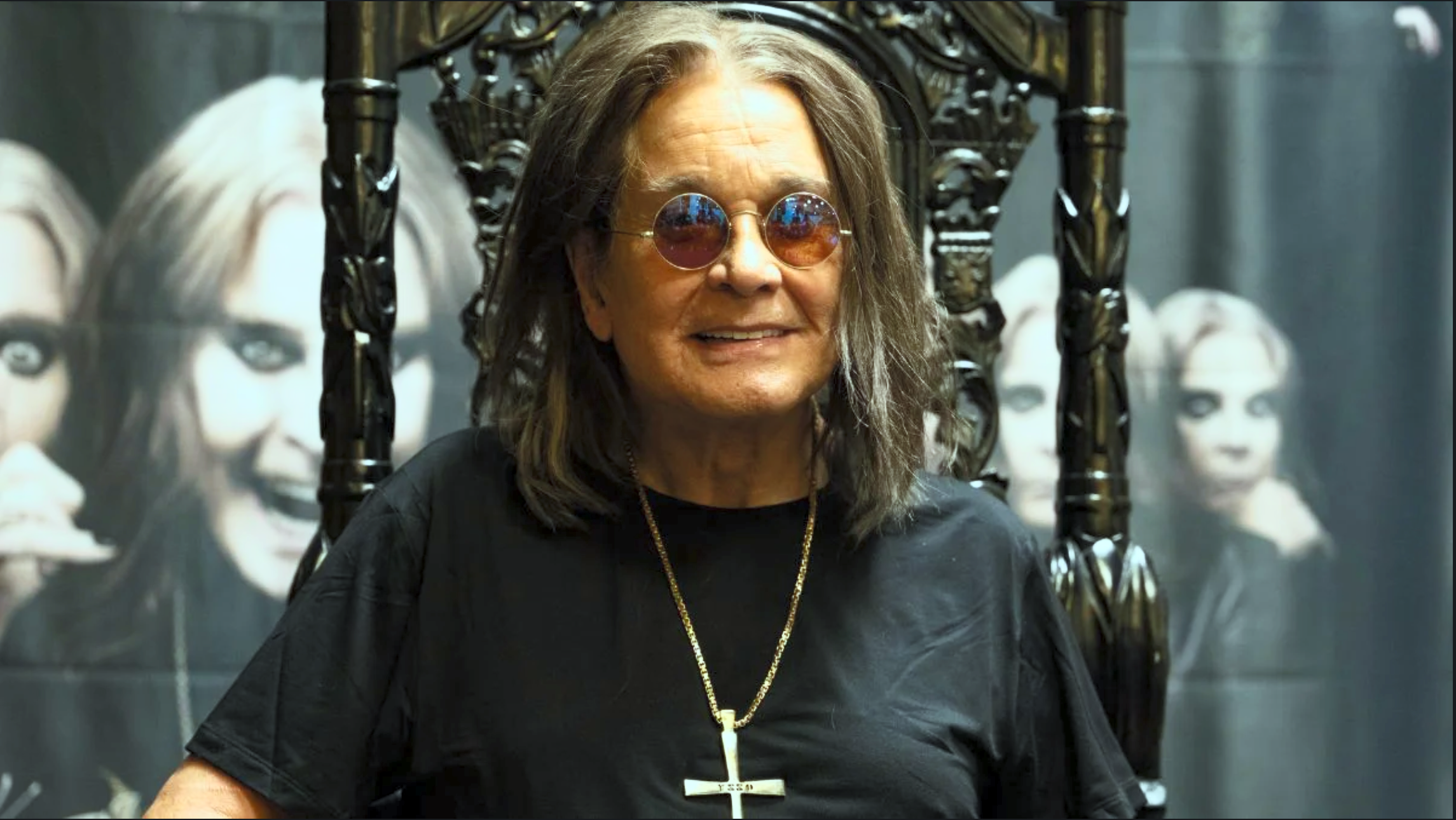
Let the Madness End: Remembering Ozzy Osbourne’s Journey from Chaos to Clarity

Ozzy Osbourne didn’t just sing about darkness—he lived in it, danced with it, and somehow emerged with a spark that lit up generations. As fans mourn the loss of the Prince of Darkness, it’s worth remembering not just the legend, but the man who clawed his way back from the brink more times than most could survive.
From Birmingham to Black Sabbath: The Rise of a Rock God
Born John Michael Osbourne in 1948, Ozzy’s early life was steeped in poverty and grit. He found salvation in music, forming Black Sabbath in 1969 and helping birth heavy metal with haunting riffs and apocalyptic lyrics. But fame came fast—and so did the demons.
By the late ’70s, Ozzy’s substance abuse had spiraled so far out of control that he was fired from the very band he helped create. His solo career soared, but so did the chaos: arrests, overdoses, and infamous moments like biting the head off a bat. He became a caricature of excess, even as fans adored him.
The Long Road to Recovery
Ozzy entered rehab for the first time in 1984. It wouldn’t be the last. For decades, he cycled through addiction and sobriety, often publicly. He once said, “I thought I’d be drinking to the day I die. Most of the people I drank with are dead. And the ones that aren’t… are going to be dead soon.”
But around 2014, something shifted. Ozzy got serious about recovery—not just for himself, but for his family. He credited Sharon Osbourne, his wife and manager, with saving his life more than once. He began speaking openly about addiction, mental health, and the toll of fame. His honesty helped destigmatize recovery in the rock world. He entered rehab multiple times and eventually embraced recovery—not as a victory lap, but as a daily commitment.
Parkinson’s, Pain, and Perseverance
In 2020, Ozzy revealed he had Parkinson’s disease. It was a gut punch to fans, but he didn’t retreat. He kept performing, kept recording, and kept showing up—even when he had to sing from a chair.
Even in his final years, recovering from multiple surgeries while battling Parkinson’s, Ozzy remained candid about his health and sobriety. He told fans, “I may be moaning about how I can’t walk… but I’m still alive.”
His final concert in July 2025 raised $190 million for charity, including Cure Parkinson’s. It was a full-circle moment: the man who once seemed invincible, now vulnerable and yet victorious. Ultimately, it was a powerful farewell from a man who never stopped showing up, even when it hurt.
Why His Story Matters More Than Ever
Ozzy’s recovery wasn’t perfect, but it was real. That honesty shined a light into the dark corners of addiction in the rock world. His life wasn’t tidy, it was loud, messy, often heartbreaking, and also a testament to survival. He showed that recovery isn’t always linear, that love can be a lifeline, and that even the most chaotic souls can find peace.
His family announced his passing on July 22, 2025, stating that he died peacefully, surrounded by loved ones.
For those mourning him, his story offers more than nostalgia, it offers hope. If Ozzy could face his demons and still find joy, love and peace – we can too.




3 Comments
I’m grateful to see recovery is not perfect. It took me multiple times before I got recovered! I’m thankful for resources like this one to show the many faces of sobriety.
I’m grateful to read Devine in this newsletter. Love the educational aspect, and Recovery is for life! Thank you
Great story