

Recovery in the Age of Doomscrolling: How to Stay Grounded Online

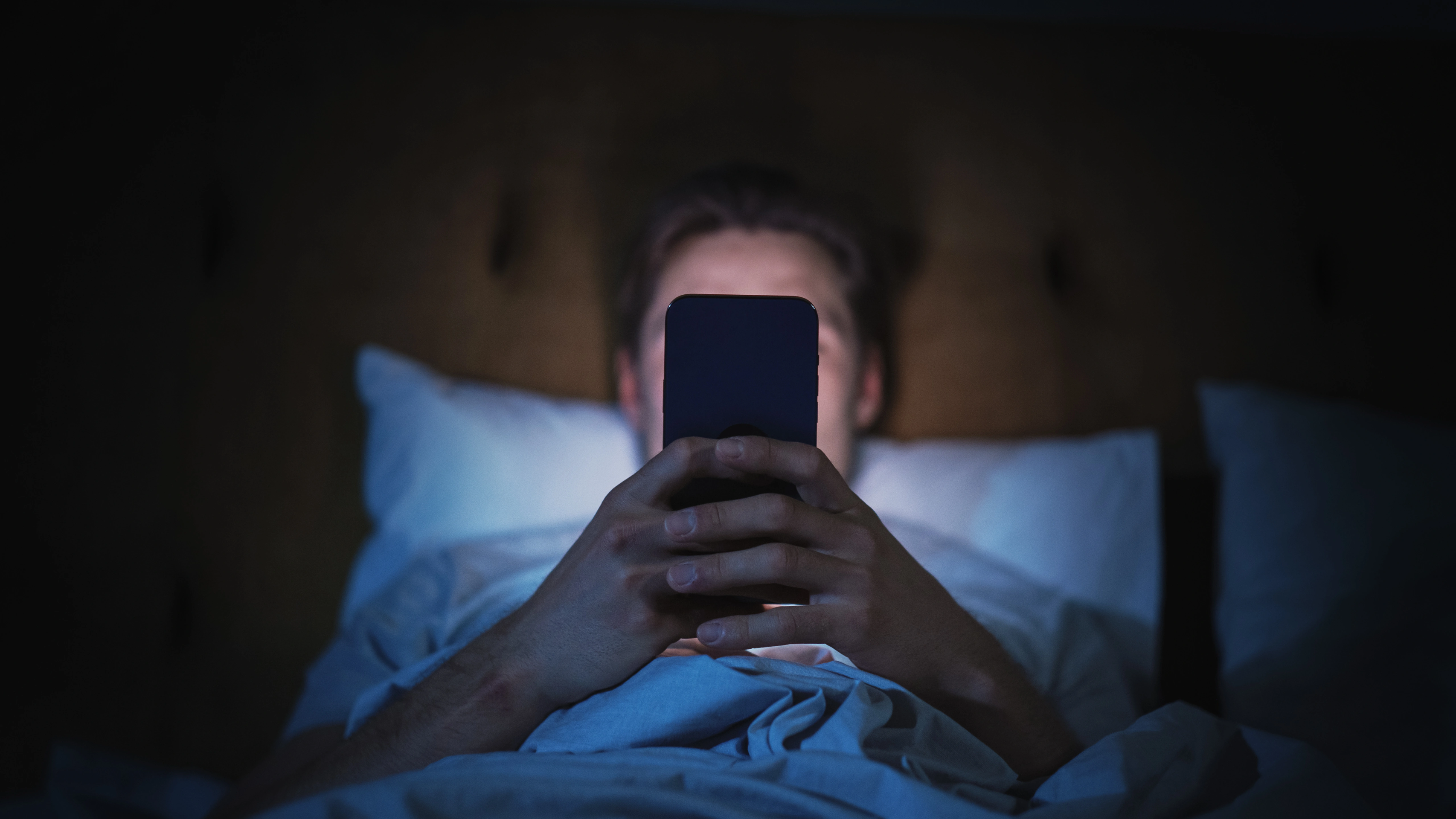
We’ve all been there, one scroll turns into twenty, and suddenly your nervous system feels like it’s been through a war zone. In recovery, we talk about triggers, boundaries, and emotional regulation. But what happens when the trigger is in your pocket, glowing at you with every swipe?
Doomscrolling isn’t just a bad habit. It’s a digital trance that feeds anxiety, numbs connection, and hijacks our attention. And in recovery, attention is sacred.
What Is Doomscrolling, Really?
Doomscrolling is more than just a late-night habit, it can become a digital descent into a vortex of negativity. It starts innocently enough: a quick check of the news, a glance at social media, maybe a scroll through trending topics. But soon, the feed becomes a flood. Crisis after crisis, outrage after outrage, and before we know it, we’re emotionally saturated and mentally frayed. This isn’t just about staying informed, it’s about being pulled into a cycle of compulsive consumption, where the content is curated not for clarity or calm, but for engagement and alarm. Our brains, wired to detect threats, latch onto the worst of it. And the algorithms? They’re designed to keep us there.
In recovery, this matters. Because doomscrolling mimics the very patterns we’re trying to unlearn: compulsivity, emotional numbing, and isolation. It’s a behavior that feels passive but has active consequences on our nervous systems, our sleep, our sense of hope. Unlike other triggers, it’s socially accepted, even encouraged. We’re told to “stay informed,” but rarely taught how to stay intact. Doomscrolling doesn’t just steal time, it steals presence. And in recovery, presence is everything.
It’s not just what we’re reading, it’s how it makes us feel. And how long we stay stuck there.
Why It Hits Harder in Recovery
For those in recovery, doomscrolling doesn’t just drain attention, it can quietly echo the very patterns we’ve worked so hard to unlearn. The compulsive pull to refresh, to check, to keep going “just a little longer” can feel eerily familiar. It mimics the loop of craving and reward, the emotional numbing, the isolation. And because it’s socially sanctioned, often disguised as staying informed or being engaged, it can slip under the radar of our usual recovery tools. We may not even realize we’re dysregulated until we’re already deep in the spiral, our nervous systems buzzing with secondhand stress.
You don’t have to consume every crisis to prove you care.
Recovery asks us to stay present, to build tolerance for discomfort, to reconnect with ourselves and others. Doomscrolling pulls us in the opposite direction. It floods the system with urgency and helplessness, then leaves us alone with the aftermath. And unlike other triggers, it’s always available, waiting in our pockets, glowing on our nightstands. That’s what makes it so insidious. It’s not just the content that’s overwhelming, it’s the way it bypasses our boundaries and hijacks our emotional bandwidth.
Grounding Practices for the Scroll-Weary
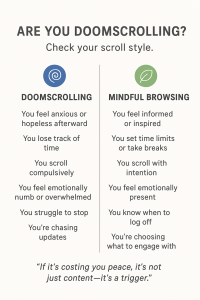
If doomscrolling is the storm, grounding is the shelter. Recovery thrives on intentionality, and even small shifts in how we engage online can protect our emotional bandwidth. These practices aren’t about perfection—they’re about choosing peace, one scroll at a time. Here’s some practical, accessible tips:
Emotional Check-Ins
- Before opening an app, ask: What am I feeling right now? What am I hoping to find?
- After scrolling: Do I feel more connected or more depleted?
Mindful Media Habits
- Set a timer for social media use.
- Curate your feed! Choose recovery-friendly platforms like InTheRooms.com that support connection, not spike anxiety.
- Replace doomscrolling with “joyscrolling”: follow accounts that uplift, educate, or soothe.
Digital Rituals
- Create a “scroll-free zone” in your day: morning coffee, evening wind-down.
- Use grounding tools: breathwork, journaling, or even a walk before checking your phone.
Recovery is about reclaiming our attention. It’s about choosing what we feed our minds, and how we honor our emotional bandwidth. In a world that profits from our panic, staying grounded is a radical act of self-care.